Ionic Partners Announces Three Key Promotions, Highlighting Talent and Signaling the Firm’s Continued Growth

Austin, TX – April 21, 2025 – Ionic Partners (“Ionic”), a global investment platform dedicated to empowering mission-critical software companies to scale beyond limits, proudly announces the promotion of three distinguished team members: Tanner Cerand, Michael Wright, and Timothy Li.

Tanner Cerand has been elevated from Principal to Partner, focused on originations. Tanner has been instrumental in building Ionic’s proprietary sourcing engine and originations network, sourcing high-potential software companies for the firm’s portfolio. Michael Wright has been promoted from Senior Associate to Vice President on Ionic’s investment team. And Timothy Li has been promoted to Senior Associate, Originations.

“We take great pride in acknowledging the exceptional contributions of Tanner, Michael, and Timothy. Their dedication to innovating, building, and supporting Ionic has been instrumental in generating substantial value for our portfolio, aligning with our mission to help software companies, management teams, and individuals unlock their full potential.”, shared Donald Park, Co-Founder of Ionic Partners.

Ionic specializes in partnering with companies when they are facing a major inflection point in their development and growth. With over 50 years of combined expertise as operators and investors, Ionic leverages a proven operating model and a uniquely dedicated team of operating professionals to transform these companies into modern market leaders. The firm’s focus on operational excellence, strategic scaling, and innovation has positioned it as a preferred partner of software founders and operators, highlighted by Ionic’s recent investments in CXT Software and School-Day.

“These promotions underscore Ionic’s commitment to fostering exceptional talent and highlights the firm’s accelerating growth. We look forward to investing in our companies and employees in equal measure and are excited to recognize their achievements.”, added Andy Tryba, Co-Founder of Ionic Partners.

About Ionic Partners
Ionic Partners is a global enterprise software investment firm led by seasoned operators, dedicated to acquiring and scaling enterprise software companies. Through hands-on partnership, strategic investment, and world-class operational best practices, Ionic Partners pursues a strong asymmetric return profile through a unique approach to operational investing.

For more information about Ionic Partners and its investment philosophy, please visit: www.ionicpartners.com.

Ionic Partners Acquires CXT Software to Strengthen Leadership in Logistics Technology Solutions

Accelerating CXT Software’s Growth with Innovation, Expanded Resources & Market Reach

AUSTIN, TX, UNITED STATES, February 19, 2025 / — Ionic Partners, a leading enterprise software investment firm specializing in acquiring and investing in B2B software businesses, announced today its acquisition of CXT Software, a premier provider of logistics and courier software solutions. This strategic acquisition underscores Ionic Partners’ commitment to delivering cutting-edge technology and operational excellence across mission critical, high-growth industries.

CXT Software, headquartered in Phoenix, Arizona, has been a trusted partner for logistics and courier businesses for over 25 years. Its comprehensive platform is recognized for streamlining operations, optimizing delivery logistics, and enhancing customer experiences. By joining Ionic Partners’ portfolio, CXT Software will gain resources and expertise to further enhance its product offerings and expand its market reach.

Driving Innovation in Logistics Technology

“Our investment in CXT Software is a testament to our mission of identifying, partnering with, and elevating companies with robust growth potential,” said Donald Park, Co-Founder at Ionic Partners. “The CXT team has leveraged their unparalleled industry expertise to create the most holistic and dependable solution for their logistics customers. CXT’s platform and growth mentality align perfectly with our vision of transforming the future of enterprise software via operational excellence and systematic growth investments. Together, we look forward to unlocking even greater value for CXT Software’s customers and partners.”

This partnership will allow CXT Software to leverage Ionic Partners’ operational resources and technology capabilities to accelerate product innovation, enhance customer service, and scale its operations to new heights. The collaboration also signals a commitment to advancing technology solutions for the courier and logistics industry during a time of increasing demand for efficiency and scalability.

What This Means for Customers and Partners

For existing customers and partners, the acquisition will result in:
• Enhanced Features and Support: Accelerated development of new tools and features tailored to the logistics sector’s evolving needs.
• Stronger Operational Resources: Access to the extensive experience and resources of Ionic Partners to bolster customer service and satisfaction.
• Growth Opportunities: Expanded reach into new markets and industries, ensuring scalable solutions for businesses of all sizes.

“Ionic Partners’ focus on growth and innovation is a perfect match for CXT Software’s vision,” said Shaun Richardson, CEO of CXT Software. “This partnership creates a powerful synergy, enabling us to better serve our clients and strengthen our leadership position in logistics technology.”

About Ionic Partners
Ionic Partners is a global enterprise software investment firm led by seasoned operators, dedicated to acquiring and scaling enterprise software companies. Through hands-on partnership, strategic investment, and world-class operational best practices, Ionic Partners unlocks new opportunities and drives accelerated growth.

About CXT Software
CXT Software is the industry-leading shipment management platform for logistics needs throughout North America. The company provides courier, last-mile, LTL, distribution, and customized logistics businesses with the technology and support service necessary to compete and grow in the ever-evolving delivery industry. CXT Software is headquartered in Phoenix, Arizona, and has been a trusted logistics partner to thousands of businesses for 25 years.

Sparkrock Acquires School-Day to Enhance Integrated Payment Solutions for K-12

Sparkrock, an Ionic Partners company and leading provider of enterprise software for K-12, nonprofits, and government organizations, is announcing their acquisition of School-Day.

TORONTO, CANADA, February 4, 2025 /EINPresswire.com/ — Sparkrock, a leading provider of purpose-driven enterprise software for K-12 schools, non-profits, and government organizations, is announcing their acquisition of School-Day.

School-Day is a premier payment processing and activities management platform that makes it easier for schools and parents to manage student payments online. This strategic acquisition was made in service of Sparkrock’s vision to build the most full-featured, secure, and user-friendly cloud software solution possible for the education sector.

The partnership brings together Sparkrock’s robust finance, human resources, payroll, and student information system (SIS) capabilities with School-Day’s expertise in cashless payments, fee management, and digital forms solutions.

Today, Sparkrock’s software ecosystem manages nearly $14 billion per year in K-12 finances, processes over $10 billion in K-12 payroll per year, and handles more than 100,000 K-12 paystubs per month.

Together, the combined organization will offer a comprehensive platform to better meet the needs of schools, staff, students, and parents.

“This acquisition is an exciting step forward in our mission to empower schools with an all-in-one solution to achieve greater efficiency and impact,” said Andy Tryba, CEO of Sparkrock. “By integrating School-Day’s school- generated funds capabilities with Sparkrock’s powerful ERP and SIS systems, we will accelerate our mission of streamlining secure cloud operations for schools by reducing administrative burdens. Most importantly, this will enrich the educational experience for students and families.”

School-Day’s platform, which serves hundreds of schools across Canada, is known for its ease of use and focus on improving communication and collaboration between schools and parents. Combined with Sparkrock’s advanced data management and reporting capabilities, the integrated offering will help educational organizations improve their operational effectiveness while creating a better experience for end-users.

What This Means for Customers

The acquisition means that existing customers of both Sparkrock and School-Day will benefit from:

Seamless Integration: Enhanced alignment between administrative operations, payment systems, and parent engagement tools, resulting in increased productivity.

Expanded Product Team: Accelerated development of new product features to address evolving needs in the education sector.

Stronger Support: Access to expanded resources and expertise from a unified team of industry leaders, ensuring improved responsiveness and exceptional service.

“Joining Sparkrock is a natural evolution for School-Day,” said David Parisi, CEO of School-Day. “Together, we are uniquely positioned to deliver unparalleled value to educational organizations, helping them create more efficient workflows and better serve their communities.”

About Sparkrock

Sparkrock provides enterprise software solutions designed specifically for K-12 schools, nonprofits, and public sector organizations. With a focus on helping purpose-driven organizations operate more effectively, Sparkrock’s technology enables smarter resource allocation and better decision-making, so customers can maximize their community impact.

About School-Day

School-Day is a leading platform for parent engagement and school payments. By offering cashless transactions, digital permission forms, and streamlined communication tools, School-Day helps schools reduce administrative workloads and strengthen relationships with families.

About Ionic Partners

Led by a team of seasoned software operators, Ionic Partners is a global enterprise software platform focused on investing in businesses with strong core products and durable recurring revenue. Ionic creates extraordinary value through a product-led thesis and by infusing world-class operating best practices into the daily workflow of their companies. For more information, please visit v1.ionicpartners.com.

Ionic Partners Completes Sale of Gigster to Virtasant

Dramatic Transformation of Gigster Under Ionic’s Ownership

Ionic Partners, a global investment platform focused on the acquisition of ‘Second Chasm’ enterprise software companies, announced today the successful completion of the sale of Gigster to Virtasant, a leading provider of cloud optimization services. This sale crystallizes a dramatic transformation of the Gigster business since its acquisition by Ionic in May 2021.

“We are thrilled to welcome Gigster to the Virtasant family,” said Michael Kearns, CEO of Virtasant. “Gigster’s innovative approach to assembling cloud teams, combined with Virtasant’s cloud expertise, will enable us to deliver even greater value to our customers. We look forward to working closely with the Gigster team to drive continued growth and success.”

Ionic’s decision to acquire Gigster in 2021 stemmed from the team’s research-driven approach to understanding the future of work. Ionic developed an investment thesis around delivering scalable software solutions via the human cloud and identified Gigster as being uniquely positioned as an investment candidate.

Founded in 2014 and backed by well-established venture capital investors such as Andreessen Horowitz, Redpoint Ventures, Y Combinator and others, Gigster quickly built a roster of blue-chip customers and established a strong reputation as an innovative platform for the delivery of advanced software products, built by the best engineering talent in the world. However, despite having established itself as an early leader, Gigster was facing a number of business and financial constraints that threatened the company’s existence.

“At the time of Ionic’s investment, Gigster was saddled with operational and balance sheet issues that hindered the business and obscured the exceptional quality of Gigster’s products, employees, and customers,” described Donald Park, Co-Founder of Ionic Partners. “This is not uncommon among ‘Second Chasm’ companies – organizations with excellent products and people but burdened by misalignment among stakeholders.”

The successful sale of Gigster to Virtasant represents the culmination of a significant turnaround under Ionic’s ownership. In less than three years, Ionic Partners utilized its differentiated transformation approach, value creation strategies, and operational best practices to overhaul Gigster’s business. Ionic reconstructed Gigster’s operational framework, achieved profitability, expanded its employee base globally, and deepened strategic relationships with Fortune 500 clients, propelling the company towards strong growth and scalability. This growth was further amplified by Gigster’s acquisition of CodersRank, now Metrx, in 2023.

The strategic sale of Gigster to Virtasant also represents a significant milestone in Ionic Partners’ growth strategy and underscores its commitment to delivering exceptional value to its investors, partners, and portfolio companies.

Some highlights of Ionic’s investment in Gigster include:

Distinctive sourcing and evaluation: Ionic leveraged its extensive domain expertise to identify a unique investment opportunity.

Fast, fair, and disciplined partner: The acquisition of Gigster was completed in 10 business days – being fast, fair, and disciplined are all hallmarks of Ionic’s approach.

Immediate atomic-level operational focus: Ionic deployed its team of experienced operators and proprietary best practices and playbooks to accelerate transformation and reinvest in the business.

Organic and inorganic growth: Ionic drove revenue growth by focusing on providing more value to existing customers, achieving ‘100% customer success’, and expanding into new markets and products, including the CodersRank acquisition.

Finding the right home: Combining Gigster with a highly strategic acquirer in Virtasant provides Gigster’s employees, customers, and products with the best platform for its future growth.

Looking Ahead:
As Gigster embarks on this new chapter, Ionic Partners remains committed to identifying and nurturing exceptional investment opportunities. The firm will continue to seek out challenged but durable businesses, pursuing strong asymmetric return potential without typical early-stage risk.

About Ionic Partners:
Led by a team of seasoned software operators, Ionic Partners is a global enterprise software platform focused on Second Chasm companies with strong core products and recurring revenue. Ionic creates extraordinary value through a product-led thesis, leveraging a cloud-first global workforce, building elastic infrastructure, and infusing world-class operating best practices into the daily workflow of their companies.
For more information, visit v1.ionicpartners.com

About Virtasant:
Virtasant is a leading provider of cloud optimization, cloud operations, product development, and outsourcing services. As a global team of cloud professionals in over 130 countries, we work with leading companies around the world to help them thrive in the cloud.
For more information, visit www.virtasant.com

Ionic Partners unites Edsembli and Sparkrock to forge a new powerhouse in Canada’s K-12 EdTech space

Ionic Partners announced the acquisition of Edsembli, a leading provider of ERP & SIS solutions for K-12 school boards in Canada, merging it with Sparkrock. This strategic move aims to unite industry leaders, enhance product offerings, accelerate technological advancements, and foster community collaboration for greater impact on student outcomes.

March 19, 2024 – Ionic Partners announced today that they have acquired Edsembli, a trusted provider of ERP & SIS solutions tailored to K-12 school boards across Canada. Ionic Partners will integrate Edsembli into its previous acquisition in the K-12 education space – Sparkrock. This strategic move unites two industry leaders in Canada, accelerating innovation and increasing scalability for their customers. Moving forward, Ionic remains committed to working closely with the unified Sparkrock and Edsembli teams, focusing on strategic value creation via Ionic’s proprietary best practices and prioritizing successful outcomes for each of the combined company’s valued customers.

By harnessing the strengths of both organizations, Sparkrock is set to deliver an enhanced suite of Finance, HR/Payroll, and SIS solutions. This combination will seamlessly blend decades of industry experience with cutting-edge technology, improve the speed of implementations, and accelerate the development of AI-enhanced solutions, ultimately helping school districts make a greater impact on student outcomes.

“Sparkrock and Edsembli will bring together two world-class organizations with truly complementary products in the K-12 space. We already share numerous customers & are united in our unwavering dedication to achieving 100% customer success,” stated Andy Tryba, CEO of Sparkrock. “Bringing these two companies together will empower both customer communities to benefit from our team’s extensive industry expertise and world-class products.”

Randy Lenaghan, CEO of Edsembli, shared his thoughts on the acquisition, “Joining Sparkrock marks an exciting new chapter for Edsembli. Our product suites, years of experience and organizational cultures complement perfectly. But this combination is not solely about merging products; it’s about reshaping how educational institutions leverage technology to achieve greater efficiency and impact.”

Key Highlights of the Acquisition:

  1. A Leader in Edtech for K-12 in Canada: This acquisition positions the combined entity as a leading ERP & SIS solutions provider for the K-12 education sector in Canada
  2. Comprehensive ERP & SIS Solution: The new Sparkrock will merge the ‘best of’ feature sets to offer a comprehensive ERP solution and an integrated SIS platform.
  3. Accelerating Migrations & Implementations: With additional resources & expertise – new and existing customers can now accelerate their move to the cloud and receive the benefits of greater flexibility, scalability, and security.
  4. Community Collaboration: Continuing to foster community-driven forums, workshops, and user groups, with a strong emphasis on knowledge sharing and collaborative growth.

Stacy Veld, Superintendent of Business Services and Treasurer at the District School Board of Niagara, a joint customer of Sparkrock and Edsembli, also shared her enthusiasm: “We are thrilled about Sparkrock’s acquisition of Edsembli. This merger brings together two highly regarded software enterprises in educational technology, promising us enhanced solutions and services. We eagerly anticipate the innovative changes and improvements that will support our system and day-to-day operations.”

About Ionic Partners

Led by a team of seasoned software operators, Ionic Partners is a global enterprise software platform focused on investing in businesses with strong core products and durable recurring revenue. Ionic creates extraordinary value through a product-led thesis and by infusing world-class operating best practices into the daily workflow of their companies.

For more information, please visit v1.ionicpartners.com or follow @IonicPartners on Twitter

About Edsembli

Edsembli is a leader in ERP and SIS solutions for K-12 education in Canada. Their solutions empower educators to reshape the student learning journey. By integrating essential functions like human resources, payroll, finance, and student information management into a singular platform, Edsembli seeks to modernize educational institutions to meet the demands of contemporary education.

For more information, please visit www.edsembli.com.

About Sparkrock

Since its establishment in 2003, Sparkrock has provided ERP solutions to Education, Nonprofit, Health, and Human Service organizations. Their ERP software, Sparkrock 365, is built on the highly reliable and secure Microsoft cloud platform. While most solutions are built for for-profit businesses, Sparkrock 365 is specifically designed to empower educational institutions with essential tools for thriving in the digital era.

For more information, please visit www.sparkrock.com or follow @sparkrockinc on Twitter

How to use 3 min videos to better manage your remote team

Congratulations. You’ve managed to (sorta) figure out this remote work thing. Your team is working from home, Zoom appears to be working and your company did not go down in flames.

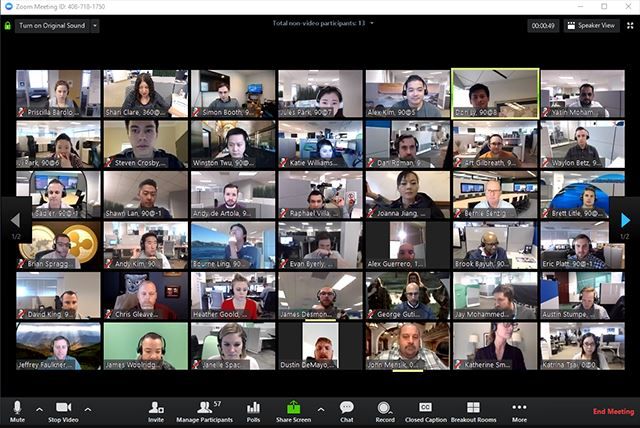
But unfortunately – now you’re stuck in Zoom meeting hell. You’ve replaced your physical workspace for a non-stop video conference. Brutal.

It doesn’t have to be this way.

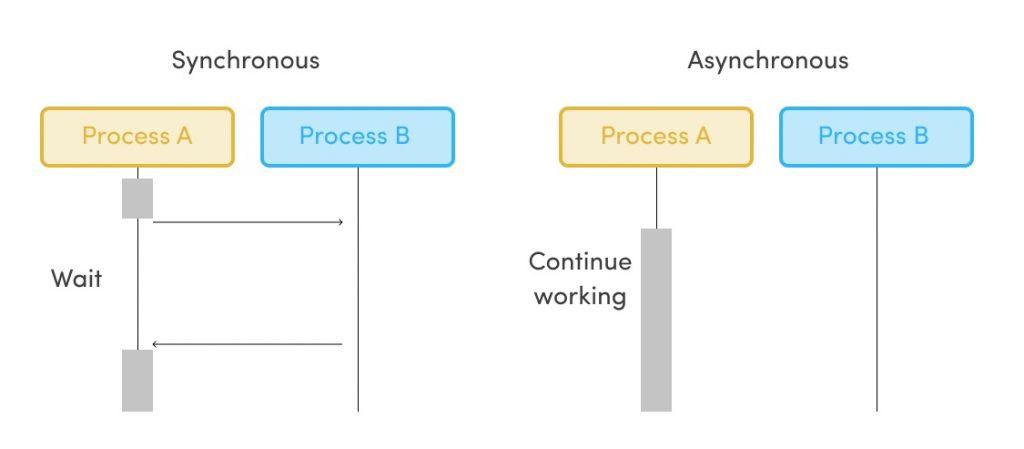
What is ‘asynchronous’ work?

You’ve seen the term before but largely ignored it. Why would you work differently – just because you’re not in the office?

Because of your Zoom hell – that’s why.

A key part of leveraging remote work is to enable folks to work on their own time. Their own schedules, their own locations, their own time zones. If you don’t do that – you force everyone to jump on unproductive Zooms together (and at odd times).

Instead – you need to adopt a culture where work can actually occur without you. Async.

How?

The standard method to get to async is long-form written documents. These written documents serve as the base – then others add to it, comment, etc. This document then provides the framework that leads to a set of actions the team delivers.

Though the long-form document has its place in async – sometimes you need a richer medium. And if a picture is worth a thousand words – a video is worth a million. 

With a quick video – you can better communicate verbal (and non-verbal) cues that are lacking from written documents. If done right – they are easy and highly effective.

We use quick async videos in a variety of ways. Sometimes they are from the managers to update their team on initiatives or overall priorities for the week, or sometimes they are from individuals to their managers for quick weekly goal updates, and sometimes they are between teammates to provide quick progress updates or ask questions. 

In all scenarios – the videos are rich in content and help enhance teamwork within the organization. And unlike written docs – videos enhance the company culture by adding personalization and a ‘feeling’ of working closely together despite the miles of separation.

But to ensure you don’t swap your Zoom hell for video watching hell – here are 5 tips to do them right.

5 tips for better async video:

1. Use a simple recording app

Back in the day – recording and sharing videos was a huge pain. Often times you’d record on 1 device, transfer the file, encode it then attempt to send a huge file to someone. 

But nowadays – there are a variety of great software providers that have made this super simple. My favorites are CleanShotJumpShareLoom and Microsoft Stream for Teams users. 

All of these offer simple ways to hit 1 button, record and send. 

CleanShot X for Mac

2. Never longer than 3 minutes

If you think opening up your inbox in the morning and seeing 1000 new emails is brutal – try opening up a video and seeing that you’re being asked to watch 20 mins of a boring monologue. Literally – paint drying.

Despite the temptation to go longer – never EVER record these update videos for longer than 3 minutes. If you need more time than that – either breakup the video into multiple topics or simply provide the key points in the video and send additional written information.

Same deal with all the videos you get from your team. 3 mins max and enforce it.

3. Record once

Most people hate hearing & seeing themselves on video. So they continue to re-record the video over and over and over and over and over and over and over and over.

Don’t do that. 1 take only. Ship your MVP (minimally viable product).

Remember that this is an internal video and probably only watched once. So don’t waste a ton of time recording it.

Only exception to this rule is if you violate the 3 min rule. Then take a second take to shorten it.

4. Show your screen & your face

Most recording software has 3 choices – record the screen, record webcam, record both screen and webcam. Pick the ‘both’ option.

If you only record the screen – your audience misses your non-verbal cues and the video lacks personality. If you only record the webcam – your audience lacks valuable visual information. Additionally, your audience ‘fatigues’ at staring at you for the entire 3 min monologue. Since the typical 2 person live conversation averages 2 mins per person per turn, your audience expects to ‘speak’ and the video gets annoying (just like a person who talks too much in person).

When you record the screen as primary (larger) and the webcam as secondary (smaller) – this ends up as the right balance. The video has content to read while listening to you – but still shows your facial gestures and non-verbal cues.

5. Send the link – not the file

Unfortunately, after recording these 3 min videos, they end up as huge files. Sending this file over email is typically rejected by your mail server and is a poor practice.

Cloud to the rescue.

Recording software companies have solved the large file problem by automatically uploading the video to their cloud storage then creating sharable links. Simply send that link to your team. They click on it and watch from any device.

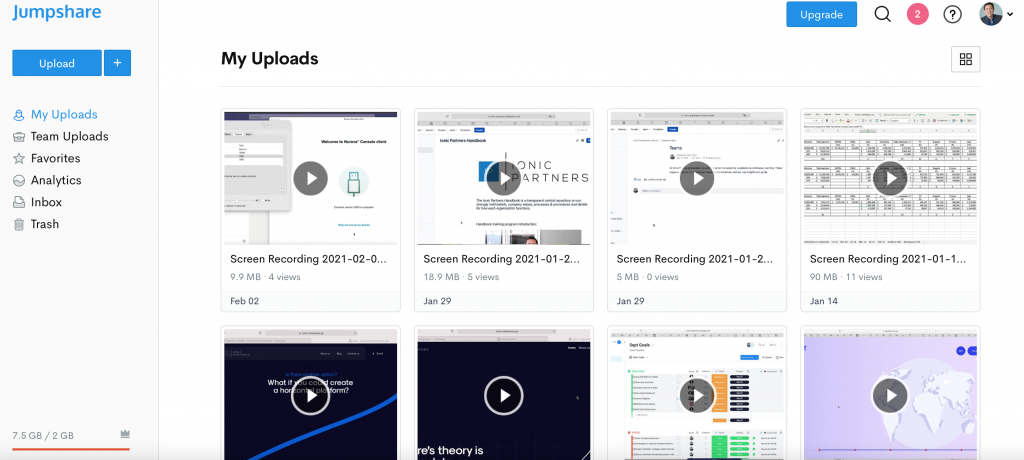
Some recording apps (like Jumpshare and Loom) are native SaaS apps – and automatically display the video in their cloud interface. These work great also. You end up creating a personal YouTube-like channel of your videos and can measure views, length of viewer watch time, etc. And if you no longer want the video available – you can simply unshare it.

Conclusion

Managing remote teams is hard. You have to rethink the way you manage or you end up in Zoom hell. Bringing in asynchronous work is the key – and quick videos are an important tool for you and your team to master.

For additional information on how to record great videos – see these pieces:

How a stack of books can make your video conferencing 10x better

5 steps for great video conferencing while traveling

5 Advanced Video Conferencing Tips

When people hear you’re a ‘remote worker’ – they automatically assume you’re working in some elevator-music-filled coffee shop or sitting around the house in your pajamas taking conference calls. They also, unfortunately, think you’re less professional (which obviously isn’t true). But if we want to truly make remote work mainstream – we need to change these perceptions and up our ‘remote work’ game. We need to start with how they ‘see’ you. In a remote worker world – that is via video conferencing. Here are 5 ‘advanced’ tips on how to improve your video conferencing professionalism.

Note – I’m skipping the ‘basic’ video conferencing stuff. Yes – have enough bandwidth to do great HD video. Yes – audio quality matters. Yes – use Zoom or some other provider. No – don’t use your phone as the endpoint. No – don’t have your cats jumping on your lap. There are plenty of blogs out there with basic tips – this blog is for the advanced class.

Advanced Tip 1: Camera orientation

First – it’s important to discuss the end state of what you’re trying to accomplish – a video conference that feels super professional and feels as close to an ‘in-person’ meeting as you can. To do this – the #1 consideration is the orientation of the camera.

I do video calls with 50-300 remote workers a week – and I can tell you that it’s in the single digits on how many of them get the orientation right.

The key to a correct orientation is the camera angle is parallel to your eyes. When the camera is ‘straight on’ – you look like you would if you were meeting in-person. Angles are everything here – and if you’re off by even a little bit – you lose the feeling of in-person.

Take a look at the images below – and you can see the huge difference between the right angle (first image) and wrong angles (all others)…

The right angle
Wrong angles

Advanced Tip 2: Laptop camera

Note the middle ‘wrong’ image above – this is a typical ‘laptop’ camera angle. What often occurs (since the camera on the top of the angled screen) – is that you get the ‘up the nose’ angle. You lose professionalism – and it doesn’t matter who you are – nobody looks good from this angle.

To use your laptop effectively for video conferencing – you have to eliminate the angle of your laptop screen and have it positioned at 90% instead. But for the camera to then not point at your neck – you need to raise it by putting 5-6 books under it. This puts the camera at eye level and brings your orientation back to the right position.

The only problem now is that you’re actually too close to the camera – and you look huge on camera to the other side. So to solve that – you’ll want to move your chair about 2 feet away from the desk or table you put your laptop on. This will feel a bit weird at first – but it’s the right distance away for the correct amount of torso to be seen in the video and for you to look closer to the ‘correct’ image above.

Advanced Tip 3: Background

Another big mistake that I see remote workers make is not paying attention to what’s behind you in the video conference. It’s hard to take you seriously when I see your Luke Skywalker bedsheets in the background.

The ideal background is a blank or wallpapered wall (like you see in my image above) or a professional area such as a neat bookshelf or lamp. You should basically ask yourself – if I were closing a $1M deal – would the person believe I’m in a corporate office? If yes – you’ve got a good background.

There are also apps that have built-in background blur or green screen. I find those largely distracting and don’t often work well (particularly around the edges of people). I wouldn’t recommend using that option to hide your background.

One trick that I’ve used in the past is to ‘make’ a professional background using a photography setup. You can pick up a stand kit on Amazon for under $40 and a variety of different backdrops for only $10-$15. So for ~$50 – you can have a truly professional background – that’s super easy to put up and down – and you’ll fool everyone that you’re not in an office. So if you’re stuck with your Luke sheets and have no other options – get this setup.

Advanced Tip 4: Noise-canceling

There is nothing more annoying than tons of background noise from a participant in a video call. I’ve heard it all – from the noises of being outside to dogs barking to children crying to the flushing of toilets (this happens too often actually). I know there is a mute button – definitely use it – but also do us all a favor by getting a noise-canceling microphone.

Noise-canceling microphones are different than noise-canceling headphones. Noise-canceling headphones are to block out external noise for you (the listener). These are also great for video conferencing (such as my favorite – the Jabra Evolv 75e) – but they don’t do anything for the microphone (for us on the other side of your line).

Noise-canceling microphones, on the other hand, actively cancel out noise for the receiving side. There are many hardware mics that do this – and I highly recommend them. But the latest innovation is software microphone noise canceling. I’ve been super impressed with the Krisp.ai software guys. For $3/m – they have an amazing product that all remote workers should use to eliminate background noise. One of my favorite products of all time.

Try Krisp

Advanced Tip 5: HD Option in Settings

I’m not sure how I discovered this option – nor why it’s not ‘on’ by default – but there is a setting in Zoom (and other video providers) to turn HD on. I’m assuming they want to either conserve your bandwidth or reduce their compute requirements – but who in their right mind wants to do SD video? Have you tried going back and watching a non-HD TV? Can’t do it.

The setting in Zoom is under Preferences -> Settings -> Video -> Enable HD. Turn it on…

Okay – enough tips for now – but I’m excited for the day that everyone follows all 5 of these. And if you have more – please let me know and happy to pass them on…

What to look for in a remote job?

The audio version of the What is an Authentic Remote job? blog post

What the heck is ‘remote work’? Is a job that lets you work from home on Fridays ‘remote work’? Is a freelancer building a website for a client as supplemental income ‘remote work’? Is your designer working in Romania doing ‘remote work’? Unfortunately – the answer is ‘yes’ to all of these. How confusing… We need a better categorization of ‘remote jobs’.

Categories of remote jobs

Not all remote jobs are created equal. To break down the generic term of ‘remote job’ – let’s define 3 classes of remote jobs to get on the same page:

  1. ‘Work from home’ remote jobs: These jobs are pretending to be ‘remote’ – but really they are perks of an onsite job. This is ‘work from home Fridays’ or ‘satellite offices’ or companies that have a policy that simply lets folks work from home on occasion – but it’s expected that they are in the office for the majority of their working career. Companies tend to be trendy and offer this type of flexibility – but in reality – it’s not truly a part of their culture and secretly the managers hate people that work from home too often (they assume you’re on the golf course). This is not the future of remote work.
  2. Freelancer remote jobs: These are 100% remote jobs – but they are freelancers and other ‘on-demand’ roles. These positions are typically considered part of the ‘gig-economy’ and suffer from the friction of a marketplace. In a marketplace, you typically have to bid on jobs, which – on a global basis – tends to depress the price/hour (yes – that person in Vietnam is willing to work less than you are – and be happy with it). The bid/ask system also creates wild fluctuations in your income, has uncertainty and is project-by-project vs a long-term career. The projects also tend to be tactical and low skill roles. This is also not the future of remote work – but as Upwork has proven – there are a lot of people willing to work nights/weekends to supplement their income.
  3. Authentic remote jobs: This is the future of remote work – 100% remote, full-time / 40 hr/w roles, transparent wage rate, career/growth-oriented, all workers use both remote communication & connection tools, goals/metrics are clear, tasks are able to be completed asynchronously and the company has a remote culture. These are the Rolls Royce of all remote jobs – and what we all aspire to get. These roles will continue to grow exponentially and will have a massive impact on the global economy.

Diving into the details of Authentic remote jobs

100% remote

The true remote job has no borders. This isn’t ‘can be anywhere – as long as it’s on the East Coast of the US’. Real remote jobs are global. Let me repeat – they are GLOBAL. And they are this way to find the best person in the WORLD for the position – not the best person in your zip code.

Full time, 40 hours/week

Authentic remote jobs are not part-time nor on a bid/ask marketplace system. I’ve never seen a critical position in a company or a key player be ‘transactional’ and only show up part of the time. Additionally – the best in the world already have full-time roles – and they’re looking to put their entire brain/efforts into the next challenge.

Transparent wage rate

Despite the touchy/feely comments people make about their motivations for a job, at the end of the day, money matters – and the best Authentic remote jobs are transparent on what the wage rate is in the job description. According to a recent study by Glassdoor – money is the #1 motivator for 67% of job seekers. Remote or not remote – wage rate matters – so be transparent and include them in the job description.

Career/growth-oriented

Though money is a motivator – the best in the world are also looking for intellectual challenges that enhance their careers. This is consistent on remote and non-remote jobs – but even more enhanced when the job seeker now has an infinite number or job opportunities available to them – not just the selection in their zip code.

Use remote communication & connection tools

Many companies have video conferencing and collaboration tools – but ironically – companies that are not ‘remote-first’ fail to use them properly. Managers have to ‘remember’ to post that file on Google drive, the team doesn’t use video in the meetings, everything is synchronous, etc, etc. Authentic Remote jobs are only in companies that treat remote workers as equals.

Success goals & metrics

In a typical office job – if a role isn’t terribly well defined – you can walk around and ask your colleagues and manager to help nudge you in the right direction. In 100% remote jobs – this is much more difficult and the definition of success needs to be more clearly laid out. What are the goals, how is the work itself done, what are the objective metrics, what is the expected calendar are all important to clarify. All Authentic Remote jobs have these characteristics – so success or failure is clear and transparent.

Asynchronous

Asynch has also become a bit of a buzzword in the remote world. But the importance of it remains – Authentic Remote jobs have to be able to be done without dependence on synchronization. Unlike everyone huddled in an office – the remote worker needs to be able to complete a majority of the task on their own – in their own time. This doesn’t mean the remote worker doesn’t collaborate with others – it simply means the task itself can be broken down to individual components that the remote worker can complete on their own (with very little dependence on others).

Remote culture

True Authentic Remote jobs are in companies that are ‘remote-first’. This isn’t ‘work from home Fridays’ – it’s a proper understanding of how to build their company structure for remote organization, how to manage and cluster timezones of remote workers, how to understand the power deltas between office workers vs remote workers (ideally there are no physical offices), how to build culture remotely, how to bridge cultural gaps, and how to define roles to be clear/async/measurable.

Examples of Authentic Remote jobs from remote-first companies

Companies such as HotJar offer remote positions and check all the items on our list: they have a remote culture, they are fully remote, employ people from any region as long as the time-zone allows them to be aligned with other team members, offers employment contract for talent in specific countries or contractor agreement for the rest, paid holidays, team collaboration allowance, holiday budget, etc. That is the true remote vision and Authentic Remote jobs.

On the other side – companies like DataDog offer some remote positions, are open to offering 100% remote work, but employees need to live in the US or other areas where the company has offices. It lacks the remote culture, it does not have a fully distributed/remote team. Even if some of the offered jobs are remote, according to the classification above, the lack of remote culture makes those jobs simply flexible jobs, not Authentic Remote jobs.

Conclusion

Going back to the beginning – to get to the end state where the term ‘remote jobs’ evolves to be ‘all jobs’ – we need to be clear on our definitions and what we’re trying to expand. Specifically – employers – develop more Authentic Remote jobs as they are the future of work…